
Fleet decarbonisation is the process of cutting carbon emissions from your vehicle fleet – but it’s not just about your environmental footprint. It can also positively impact the practices and technologies in your business, your costs and your ESG credentials.
Let’s explore the benefits of fleet decarbonisation, how to implement your strategy and how Certas Energy can help along the way.
What is fleet decarbonisation?
Fleet decarbonisation is the reduction of CO2 emissions across all vehicle operations, and marks the transition of vehicles and operations away from petrol or diesel. Electric vehicles (EVs) are part of this fleet transition, but it can also include low-carbon diesel alternatives, logistics optimisation and improved driver practices.
Transport decarbonisation requires a long-term strategy that integrates technology, policies and vehicle management – with the goal of delivering measurable reductions that support your businesses’ performance and net zero targets.
Why is fleet decarbonisation important?
Reducing fleet CO2 emissions is a key milestone on the path to Net Zero. Businesses face growing regulatory pressure, with the UK government setting an ambitious target to cut emissions by 68% by 2030. This means having a fleet decarbonisation plan isn’t just about environmental responsibility but also legal compliance.
The UK also has an upcoming ban on new petrol and diesel cars and vans, with the deadline set for 2035. Clean Air Zones (CAZs) and London’s Ultra Low Emissions Zone (ULEZ) already charge daily fees for high emission vehicles – so fleet decarbonisation planning could save your business money in the long term.
What are the benefits of fleet decarbonisation?
There are more than just environmental benefits when it comes to fleet transition planning.
Strong brand image
Businesses that prioritise lower carbon emissions are more attractive to environmentally conscious consumers.
Competitive advantage
Low carbon fleets can give you an edge over competition for tenders and can strengthen stakeholder relationships.
Financial incentives
When you invest in fleet decarbonisation, you can take advantage of government grants, tax relief schemes, and even receive access to government contracts.
Regulatory compliance
Early adoption of low-carbon fuels or EVs keeps your business ahead of evolving government legislation.
New revenue opportunities
Shared charging hubs, vehicle-to-grid services and second-life applications for batteries can create additional income streams – and allows you to turn your fleet decarbonisation strategy into new business opportunities.
Fleet transition planning
There are a few steps you should take before you start implementing low carbon alternatives.
1. Assess fleet requirements
Fleet transition planning starts with assessing your requirements. Not every alternative fuel or vehicle type will be suitable for your organisation, so it’s key to analyse what your fleet needs. There is no one-size-fits-all solution – often a successful approach combines technology, behaviour change and operational reform.
2. Evaluate low-carbon alternatives
You should conduct comprehensive research on the range of low carbon options available. You might want to explore EVs, plug-in hybrids, or a low-carbon alternative fuel, like HVO. HVO is available at the pump with a Certas Energy Fuel Card – making it easily accessible to your drivers.
Make sure you assess factors like range, payload capacity, infrastructure requirements and the availability of fuelling stations. You should also consider the total cost of ownership for any upfront purchase costs, on-going maintenance, and fuel and charging expenses.
3. Optimise operations
Fleet decarbonisation technology, like FuelTapp, can give you valuable insights into fuel consumption and driver behaviour, helping businesses pinpoint opportunities for greater efficiency.
Regular driver maintenance is another consideration, as keeping fleets in the best condition improves fuel efficiency, reduces emissions, and minimises the risk of breakdowns or accidents.
4. Leverage data
Intelligent fleet decarbonisation uses a wide range of fleet data points to create the best strategy for both the environment and your business.
Key metrics to assess include fuel consumption, fleet size, total emissions, and vehicle utilisation. This data can help you identify inefficiencies and make informed decisions that can help you reduce your carbon emissions.
Fleet decarbonisation planning tools
Fleet decarbonisation technology and external support can go a long way in making your fleet transition smooth and measurable.
– Emission tracking software, like CarbonTrace, allows you to cut, control, monitor and report on your fuel emissions with a Certas Energy Fuel Card.
– Readiness assessments can identify cultural or financial gaps before you adopt a low-carbon alternative.
– Lifecycle analysis will look identify the emissions in your business from manufacture through to disposal.
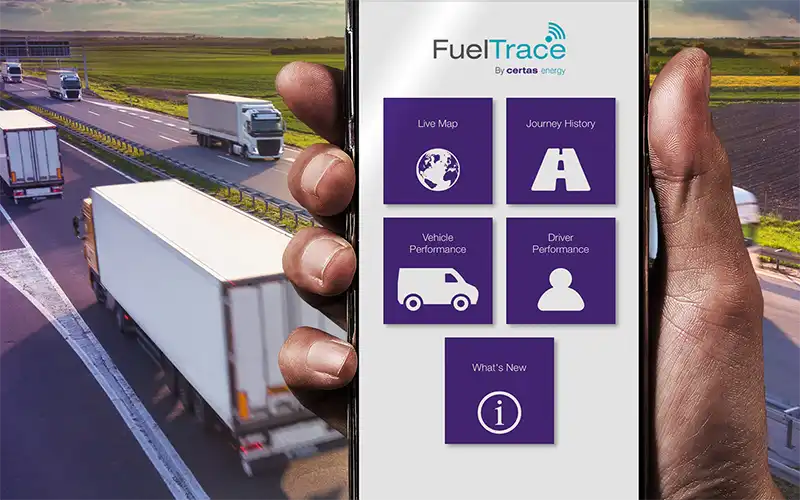
– Fleet management platforms, like FuelTrace, are integrated telematics solutions that give you full visibility of vehicle activity.
If you’re thinking about introducing a low carbon fuel like HVO, you can use our free Carbon Savings Calculator to add up the impact HVO will have on your carbon footprint.
How can Certas Energy Fuel Cards help?
The spotlight is on the transport sector to reduce and report on their emissions – so how can Certas Energy help you join other fleet decarbonisation companies? With CarbonTrace, the fleet emissions monitoring system for Certas Energy Fuel Card holders, you can report on your emissions and comply with regulations.
You can track your fleet emissions, monitor your carbon footprint, avoid hefty fines under ESOS and SECR regulations, and access data easily with our browser dashboard.
Take Control Of Your Fuel Supply
Ready to keep your home or business running smoothly?
Enjoy reliable deliveries and greater control over your energy costs. Whether you need home heating oil or fuel for your business, we’re here to help keep things moving.
You may also like...
My Business News and Views
Improving Fleet Fuel Efficiency
At Certas Energy, we know fuel consumption is a top priority for fleet managers – especially because it’s one of the biggest expenses in the transport and logistics sector. If you’re focusing on reducing fuel-related costs and your businesses’ environmental goals, improving your fuel efficiency is a great place to start. Let’s take a look at why fuel efficiency is important, best practice and how we can help. What is fuel efficiency? Fuel efficiency measures the distance […]
- Certas Energy

Certas Energy News
HVO SUPPLIED BY UK’S LEADING ENERGY TRANSITION PARTNER SET TO POWER THREE DAY FARMING EVENT
Certas Energy, the UK’s largest independent fuel distributor, has this week announced it will be powering The Great British Farm Fest using Hydrotreated Vegetable Oil (HVO) which can cut life-cycle GHG emissions by up to 90%* compared to standard diesel. The energy transition partner is fuelling up to power the event with HVO – with an expected delivery of 20,000 litres. A celebration of farmers, The Great […]
- Certas Energy

Commercial Blogs
The hidden half of your electricity bill: A guide for fuel-intensive businesses trying to manage the electric bill
The UK’s energy system is being rebuilt. Grid reinforcement, renewable integration and accelerating electrification are reshaping what a business can expect to see in their electric bill. An increasing share of electricity cost is now driven by regulated, infrastructure-linked charges that are rising steadily as the system modernises. For fuel-intensive organisations, this shift matters more than it may first […]
- Certas Energy


