
The UK’s energy system is being rebuilt. Grid reinforcement, renewable integration and accelerating electrification are reshaping what sits behind the electricity bill. An increasing share of electricity cost is now driven by regulated, infrastructure-linked charges that are rising steadily as the system modernises.
For fuel-intensive organisations, this shift matters more than it may first appear. Even where diesel or other liquid fuels remain central to operations, electricity plays a growing role across sites, depots, workshops, storage facilities and fleet transition plans. As that reliance increases, so too does exposure to a cost structure that is no longer defined by wholesale markets alone.
In this three-part series, we explore how non-wholesale electricity costs are transforming the financial landscape, what that means for organisations managing both fuel and power, and how a clearer understanding of structural cost drivers can support more resilient, commercially grounded energy strategy decisions.
PART ONE | PART TWO | PART THREE
Why the average fuel intensive business is finding non-wholesale electricity costs to be an increasingly key strategic issue
For most fuel-intensive organisations, cost conversations start at the pump and focus on diesel prices, duty levels and bulk delivery rates. Over the past few years, volatility in global oil markets has forced businesses to become more disciplined and more strategic in how they manage fuel.
But while attention has rightly focused on price per litre, or in the case of electricity price per kWh, another structural shift has been unfolding in parallel, that affects almost every fuel-heavy organisation, whether they realise it or not.
As a business, it’s important to know that electricity costs are changing, and not in the way you might expect.
Going beyond the unit rate
Wholesale electricity markets, like oil markets, have experienced significant turbulence in recent years. Prices surged during the 2021–2022 energy crisis, eased from those extreme peaks, and are now once again facing renewed uncertainty as geopolitical tensions, including the current instability in the Middle East, continue to affect global energy markets.
Yet even before the current crisis, many organisations are still seeing electricity bills remain stubbornly high or even continue to rise.
The reason for this is structural; for the average business, an increasing proportion of electricity costs now sit outside the wholesale unit rate. These are regulated, infrastructure-linked and policy-driven charges that fund the transformation of the UK’s energy system; non-wholesale costs. And in many cases, they represent more than half of the total electricity bill.
Unlike fuel duty, which is visible and well understood, business owners are finding out that non-wholesale electricity costs are often embedded within contracts and invoices, but while they are less obvious, they are no less significant.
Why this matters to fuel-intensive businesses
You may be a fuel-first operation, but you’re unlikely to be a fuel-only operation. Electricity forms a material part of the overall energy profile, including:
– Operating depots, warehouses and workshops
– Running lighting, refrigeration or plant equipment
– Maintaining offices and site facilities
– Powering electric forklifts and machinery
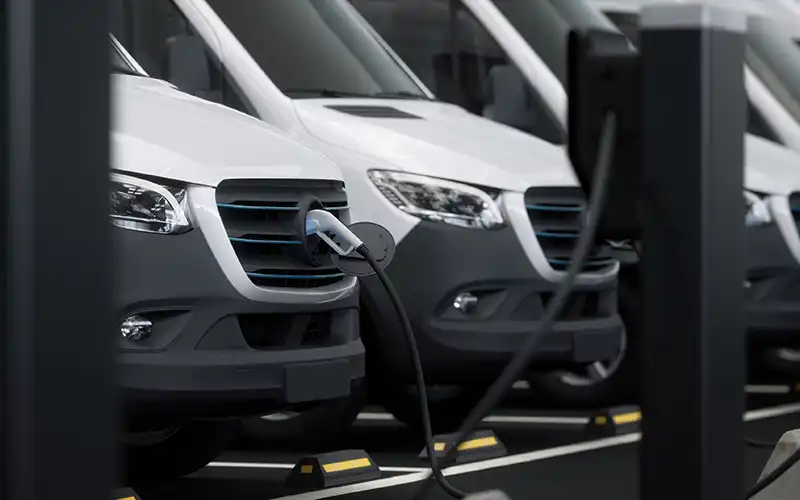
– Charging EV fleets as part of broader transition plans
– Electrifying heating and HVAC systems
This may seem obvious, but the important point to note is that as fleet electrification accelerates and on-site operations become more power-intensive, reliance on grid electricity increases.
At the same time, the cost structure of that electricity is shifting, which creates a new layer of financial exposure that sits alongside fuel.
The energy system itself is transforming
The UK’s electricity grid was designed for a different era; one with centralised power stations, predictable demand and limited electrification.
Today, things are very different, and the grid must now support:
– Rapid expansion of renewable generation – Renewable sources such as wind and solar are intermittent and often located far from demand centres, requiring new transmission capacity, balancing mechanisms and grid reinforcement.
– Electrification of transport – The growth of EV charging increases overall electricity demand and can create sharp localised peaks, particularly at depots and fleet hubs.
– Electrification of heating – Heat pumps and electric heating systems shift demand patterns, increasing winter peak loads and placing additional strain on local distribution networks.
– Increased industrial demand – As manufacturing and heavy industry transition from gas and other fuels to electricity, the overall system load rises, and network capacity must expand accordingly.
– Two-way power flows from distributed generation – Businesses and households exporting solar power back to the grid create bidirectional flows, requiring more intelligent infrastructure and upgraded substations to manage the process.
Reinforcing and modernising the system to cater for all these changes requires significant long-term investment; costs that are recovered through the regulated charges embedded in electricity bills.
In effect, we’re moving from an era defined by wholesale price volatility to one that’s shaped by structural inflation. Commodity prices will still move, but an increasing share of electricity cost is being determined by infrastructure and policy rather than market trading alone.
The parallel with fuel
Fuel users understand structural costs better than most, because fuel duty, blending mandates and compliance requirements are embedded within the delivered litre. They too are policy-driven and largely unavoidable.
Electricity is now experiencing a similar structural layering of embedded costs, including network charges, balancing costs, capacity mechanisms and decarbonisation funding schemes that form a growing part of the bill.
Crucially, they are not temporary surcharges but part of the system’s redesign. And they’re going to be present for a long time to come. When managing both fuel and electricity, the message is clear: structural cost pressure is not limited to one energy vector.
The new risk profile
This shift changes the way energy risk needs to be viewed. Historically, managing energy meant managing price volatility but today, it increasingly means managing structural exposure.
This means asking:
– How much of our total energy cost is electricity-based?
– How exposed are we to regulated and infrastructure-driven increases?
– How will electrification plans affect our electricity demand profile?
– Are we modelling electricity cost growth realistically over the next decade?
The energy transition is not confined to one fuel type: it’s reshaping the entire cost landscape. Understanding electricity structural costs is part of building a resilient, forward-looking energy strategy that balances the energy trilemma – affordability, operational security and sustainability.
In part two of this series, we will go behind the electricity bill to explain exactly what non-wholesale charges are, what they fund, and how they are likely to evolve over the coming years.
Find Out More With Centreco
Powering sustainable business growth with solar energy.
You may also like...

Certas Energy News
Your Guide To Sustainable Fleet Management
From rising operating costs and regulatory change to decarbonisation targets and efficiency goals, there are many challenges facing fleet managers in today’s climate. Amid this rising pressure, it can be hard to know where to focus your efforts – while also prioritising keeping your fleet moving. In this sustainable fleet management guide, we’ll take you through the steps you can take […]
- Certas Energy

Certas Energy News
More than 51,000kg of CO2e saved as Great British Farm Fest powered with Certas Energy HVO
Last weekend, the UK’s largest independent fuel distributor, Certas Energy, successfully powered The Great British Farm Fest using Hydrotreated Vegetable Oil (HVO), delivering 19,775 litres of the renewable fuel across the three-day celebration of farming. The Great British Farm Fest is now celebrating a reduction of greenhouse gas (GHG) emissions by approximately 51,056 kilograms of CO2e* compared to standard diesel** as a result of the leading energy transition partner’s HVO support. This highlights the […]
- Certas Energy

Certas Energy News
Government Fuel Related Tax Announcement
In response to the ongoing challenges faced by fuel-reliant industries, the Government has this week announced a series of measures designed to ease cost pressures and provide short-term financial relief across key sectors. For businesses operating in transport, logistics, agriculture and construction, these interventions could deliver tangible savings. This offers much-needed breathing space at a critical time of continued operational […]
- Certas Energy


